Educational games that don't feel like homework
Most "educational games" online fall into one of two categories: flashcard wrappers dressed up with clip art, or actual games that happen to teach you nothing. Finding something in the middle — genuinely fun, genuinely instructive — takes work. We've done that work.
These six picks from Launch Arcade cover everything from toddler phonics to university-level chemistry. No downloads, no accounts, no ads. Just open a tab and start learning something.
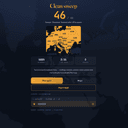
Atlas Rush
Atlas Rush is the one that'll make you realize how many countries you can't actually spell. You type country names against a ticking clock, and the map fills in as you go. It sounds simple until you're blanking on Kyrgyzstan with four seconds left. Geography teachers recommend games like this. We just made one that's actually fast and satisfying.
Solar System Explorer
Solar System Explorer lets you click around 27 celestial bodies and actually learn something about each one. It's animated, it's pretty, and it puts scale into perspective in a way that static diagrams never quite manage. Good for curious kids. Also good for adults who embarrassingly can't remember which planet has the most moons.
Atomix Periodic Table
Atomix makes chemistry feel approachable without dumbing it down. All 118 elements, presented in a glassmorphism-styled table you can actually read. Search by name, filter by category, tap an element and get the details. It's the kind of reference tool that works equally well for a high schooler studying for exams or a parent trying to help with homework and quietly panicking.
Flash Cards
Sometimes the old methods work best. Flash Cards lets you build your own decks and study in three modes — flip and rate, multiple choice, or type the answer yourself. That last mode matters more than people think. Recognition is easy. Recall is where real learning happens. Make a deck for anything: Spanish vocab, anatomy terms, historical dates. It doesn't care what subject you're studying.
Dinosaur Timeline
309 dinosaur species. Triassic, Jurassic, Cretaceous — all laid out with enough detail to feel like a real reference, not a kids' toy. Which, to be clear, it also works as. If you have a seven-year-old who can already tell you the difference between a sauropod and a theropod, this is going to be a very good afternoon for them.
Letter Zoo
For the youngest learners, Letter Zoo gets the basics right. Each letter comes with a colorful animal card and the sound it makes, so kids are learning letter-sound associations from the start rather than just memorizing shapes. It's gentle, it's bright, and it doesn't try to do too much. Sometimes simple is exactly correct.
Signal
This one's a wildcard. Signal teaches Morse code — by ear and by touch. Tap for dots, hold for dashes. Three difficulty levels. It's genuinely challenging in a way that lights up the same part of your brain as a good puzzle game. Practically useful? Rarely. Fascinating to learn? Absolutely. Also: satisfying in a way that's hard to explain until you decode your first word.
Keep exploring
These are just the highlights. We've got a full Education category with tools for every age and subject — science simulators, math tools, language practice, and more. All browser-based, all free to try. Pick one and spend twenty minutes learning something you didn't know this morning.